
Mobile App Development Process: Complete Guide for Businesses (2026)
Mobile app development process, from strategy and UI/UX design to development, testing, launch, and post-launch growth. A guide for modern businesses by Ostryx
May 7, 2026
Mobile applications have become a core part of how modern businesses operate, especially in technology-driven markets where users expect fast, intuitive, and reliable digital experiences. From fintech platforms in Toronto to logistics systems in Vancouver and digital health solutions across major cities, mobile apps now sit at the center of customer engagement and business growth.
Building a successful application is not simply a development task. It is a structured process that combines product thinking, user understanding, technical architecture, and continuous iteration.
What Mobile App Development Actually Involves
Mobile app development is the end-to-end process of creating software applications for mobile devices such as smartphones and tablets. These applications run on platforms like iOS and Android and are used across industries including retail, finance, healthcare, education, and SaaS.
- A frontend interface that users interact with
- A backend system that manages data and logic
- APIs that connect services and external tools
- Cloud infrastructure that ensures scalability
- Security systems that protect user data
In practice, mobile app development is the process of translating a business idea into a functional digital product that solves a real user problem.
The Mobile App Development Process
Every successful mobile application follows a structured lifecycle. While tools and frameworks may differ, the underlying process remains consistent.
1. Product Discovery and Problem Definition
The first stage is understanding what needs to be built and why.
At this point, the focus is not on features or technology but on the problem itself. Strong products are built around clearly defined user pain points, not assumptions.
- Who the target users are and how they currently solve the problem
- Whether the problem exists at a meaningful scale
- What existing solutions already exist in the market
- What makes a new solution valuable or different
In real-world applications, especially in competitive markets like Toronto or Vancouver, this stage often determines whether a product succeeds or fails long before development begins.
2. Product Planning and MVP Definition
Once the problem is validated, the idea is shaped into a structured product plan.
This includes defining the Minimum Viable Product (MVP), which represents the smallest functional version of the application that can be released to real users.
The purpose of an MVP is not to be complete, but to be functional enough to test assumptions in real market conditions.
Native vs Cross-Platform Development
Native development uses platform-specific languages like Swift for iOS and Kotlin for Android. It provides maximum performance and deep integration with device features.
Cross-platform development uses frameworks such as Flutter or React Native, allowing a single codebase to run on both platforms. This approach is often chosen for MVPs and scalable startup products because it reduces development time and cost while maintaining strong performance for most use cases.
The decision depends on product complexity, long-term scalability requirements, and budget constraints.
3. UI/UX Design and User Flow Architecture
Design is where the product becomes tangible.
However, effective mobile design is not focused on visuals alone. It is primarily concerned with usability, clarity, and reducing friction in user interactions.
The process begins with wireframing, where screen layouts and navigation flows are defined without styling. This ensures that the product structure is logically sound before visual elements are introduced.
Next, interactive prototypes are created. These allow stakeholders and users to simulate real interactions and validate the experience before development begins.
Finally, high-fidelity design is applied. This includes branding, typography, color systems, spacing, and component design that define the final user interface.
Well-executed UX design directly influences retention, engagement, and conversion rates.
4. Software Development (Frontend and Backend)
Once design and planning are finalized, development begins.
- Frontend development: This covers everything the user sees and interacts with, including screens, navigation, animations, and real-time interactions.
- Backend development: This handles data processing, authentication, server logic, APIs, and cloud infrastructure.
Modern development teams usually follow Agile methodology, where work is delivered in iterative cycles. This allows continuous feedback and ensures the product evolves in alignment with business goals.
At this stage, integrations with third-party systems are also implemented, such as payment gateways, analytics tools, messaging systems, and external APIs.
5. Testing and Quality Assurance
Testing ensures the application performs reliably across real-world conditions.
This includes functional validation to confirm features behave as expected, performance testing to evaluate speed and responsiveness, and compatibility testing across devices and operating systems.
Security testing is especially important for applications handling sensitive user data, ensuring proper encryption, authentication, and secure data storage practices.
Usability testing also plays a key role in identifying friction points that may not be visible during development but significantly affect user experience.
The goal of this phase is to ensure stability, reliability, and usability before launch.
6. Deployment and App Store Launch
Launching a mobile application involves submitting it to platforms such as the Apple App Store and Google Play Store.
Each platform has specific guidelines related to performance, security, privacy, and user experience that must be met before approval.
Once approved, many teams use staged rollouts, where the application is released gradually to monitor performance and detect early issues before full-scale deployment.
App Store Optimization (ASO) also becomes important at this stage, as metadata, descriptions, and visuals directly influence discoverability and download rates.
7. Post-Launch Monitoring and Product Evolution
After launch, the focus shifts from building to improving.
Modern mobile applications are continuously optimized based on real user behavior and feedback. This includes monitoring crash reports, analyzing user engagement patterns, and identifying drop-off points in user journeys.
Updates are released regularly to improve performance, fix issues, and introduce new features based on real-world usage data.
Without continuous iteration, even well-built applications gradually lose relevance in competitive markets.
How Long Does Mobile App Development Take?
Development timelines vary based on complexity.
Simple applications may take a few months, while more advanced systems with real-time functionality, integrations, or AI-driven features may take six months or longer. Large-scale enterprise applications can extend beyond a year.
However, the most significant factor influencing timelines is not technical difficulty but clarity in requirements and decision-making during early stages.
Why Mobile Apps Matter in Modern Business
Mobile applications have become essential digital tools for businesses operating in competitive markets.
They enable direct customer engagement, improve service efficiency, and provide valuable behavioral insights that help shape future strategy.
In fast-growing digital ecosystems, mobile apps are often the primary interface between a business and its users.
Why Businesses Work with Ostryx
Ostryx helps startups and businesses build mobile applications using a structured, product-focused approach. The process begins with understanding the core problem and defining what needs to be built before development starts.
Design is validated through wireframes and prototypes to ensure real user flows are clear and effective before coding begins. On the technical side, applications are built with scalability and long-term growth in mind.
Throughout development, progress is shared in structured cycles, allowing continuous feedback and alignment. After launch, support continues with updates, monitoring, and ongoing improvements based on user behavior.
What Ostryx Delivers
Ostryx provides end-to-end mobile app development, including product discovery, UI/UX design, frontend and backend development, API integration, QA testing, and post-launch maintenance.
The focus is on building reliable, scalable apps that perform well in real-world conditions and evolve with user needs.
Final Thoughts
The mobile app development process is a structured combination of strategy, design, engineering, and continuous improvement.
Successful applications are not built by focusing only on code. They are built by understanding users deeply, defining problems clearly, and executing with a structured, iterative approach.
When done correctly, a mobile application becomes more than a digital product. It becomes a long-term growth engine for the business.
Frequently Asked Questions
The mobile app development process is the steps used to turn an idea into a working app, including planning, design, development, testing, and launch.
It usually takes 2 to 6 months for a standard app, while complex apps can take 6 months or longer depending on features and scope.
Mobile app development can cost anywhere from $10,000 to $150,000+ depending on complexity, features, and design requirements.
An MVP is the simplest version of an app that includes only core features needed to test the idea in the market.
Native apps are built separately for iOS and Android, while cross-platform apps use one codebase to run on both platforms.
UI/UX design is important because it affects how easily users can navigate and use the app, directly impacting retention and engagement.
After launch, apps are updated regularly with bug fixes, improvements, and new features based on user feedback and analytics.
Yes, most business apps require a team with skills in design, development, and testing to ensure quality and scalability.
Recent Insights
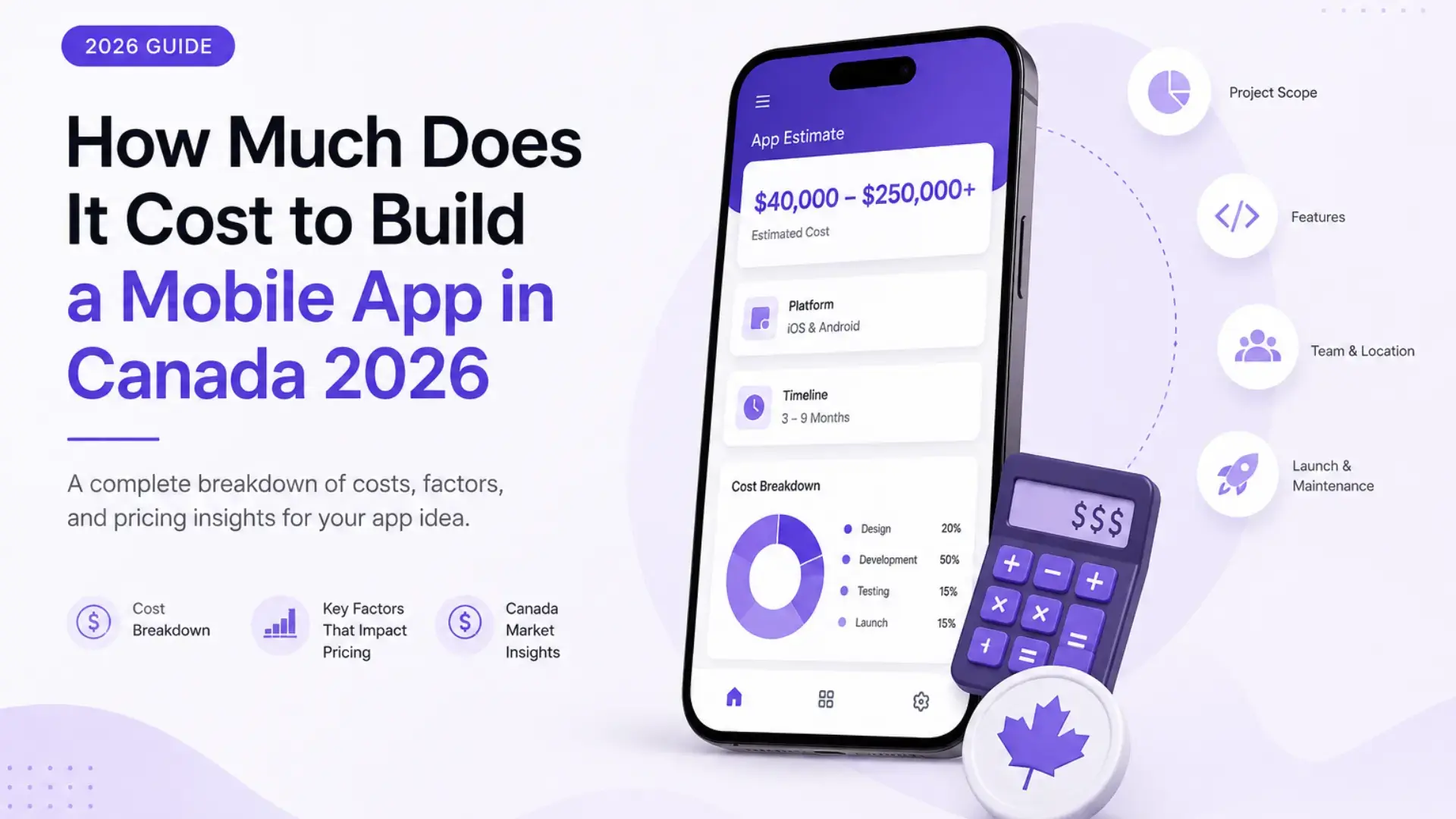
How Much Does It Cost to Build a Mobile App in Canada 2026?
June 2, 2026
Services & Solutions
Let's Connect
info@ostryx.ca
+1 (647) 717 2964
Downtown, Toronto, Canada
© All rights reserved 2026
